Is Speciesism Wrong? - Origins and Moral Implications
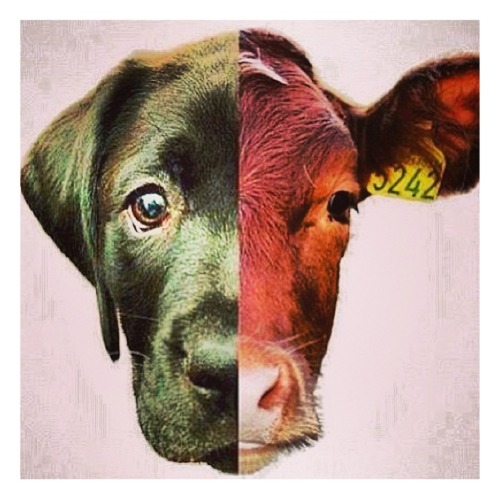
Speciesism is the act of humans favoring one species, treating them with love and kindness, while denying another species of these rights. This is a very arbitrary classification based mostly on tradition.
For example cows are seen as sacred and to be cherished in India yet people in the west have no such compunctions about exploiting these animals for their own gain.
In South East Asia dogs and cats and all manner of creatures are abused and exploited and eaten but westerners would find that abhorrent since dogs and cats are some of the best love pets for them.
The Buddha
Perhaps the first proponent of anti-speciesism would have been the Buddha. The Buddha espoused that every sentient being is sacred and should thus not be harmed as it would produce bad karma.
We can say that his thinking was original at the time because he was born and grew up in India where Hinduism is the national religion. Hindus only see cows as sacred and treat other animals the same as most other meat eating countries around the world, exploiting them as they see fit.
The Buddha, rather, realized this to be wrong, through his practice of deep internal reflection and meditation and came to the conclusion that all sentient beings have the right to be treated equally as custodians of consciousness in all its forms.
The Buddhist teachings go further to say that harming other sentient beings is an act which will destroy your own consciousness, since all consciousness is one; so harming another conscious being is really harming yourself. This can only take you backwards if seeking a path of enlightenment and an end of suffering.
Below we will examine how modern thinkers can just be seen as updating this same philosophy, adapting it to the modern discourse.
Origins of Speciesism
Richard Ryder, who originally came up with the term in the 1970s, defined speciesism as "a prejudice or attitude of bias in favor of the interests of members of one's own species and against those of members of other species."
This word and definition was then picked up by Peter Singer and popularized in his touchstone book on veganism Animal Liberation.
Influence of the book Animal Liberation
Peter Singer published the book Animal Liberation in 1975 and this is considered to be one of the most influential works on animal rights and veganism, shaping modern day views is those fields. Much of the beliefs and ideals that modern day vegans hold can be directly traced back to their roots in this book.
Speciesism is one of these ideas. You may not have heard of the word before but if you start browsing vegan related social media accounts you will soon see it cropping up.
Peter Singer's main argument in the book is to extend the idea of utilitarianism of "the greatest good for the greatest number" as a categorical imperative to do good. As such the idea should go beyond just humans and rather apply to all sentient beings, proposing that the distinction between humans and animals is a completely arbitrary one.
The book has been very influential not only for shaping individual vegan's ideas but also government policy on animal welfare over the years since its release although sadly, in the latter case, far too little.
Speciesism and the implications on veganism
Speciesism is a useful term because it encapsulates everything that vegans are fighting for in one word. The term vegan only commonly regards the diet side of things. To understand speciesism you understand that it involves all aspects of doing no harm to animals and so the correct behavior will follow from that.
If we treated animals with the same rights as humans then we de facto would not eat, experiment or abuse them. When saying "vegan" the diet is the main focus but speciesism encapsulates all these aspects into one term.
Moral implications of speciesism
To go back to the original question of "Is Speciesism wrong?", as long as you feel that harming any other living creature is wrong then it certainly is wrong.
The problem is that most humans do not feel this way about animals and instead see them only as objects to be abused for their own gain. Most atrocities in human history have occurred due to this de-humanising of other humans, be it due to race or different ideological beliefs.
Speciesism takes the same tack and says that the choice humans make of seeing animals as different, and thus lesser, than them is what leads to the incalculable suffering that animals of different species suffer at the hands of the human animal.
Conclusion
As we can see the idea of speciesism has ancient roots, although the term itself is quite recent.
The Buddha taught in ancient times that we should do no harm to other sentient beings and today that idea has continued and discussed in greater detail by western thinkers such as Richard Ryder and Peter Singer.
As such has influenced many different fields involved in animal rights and animal welfare. It has helped form government policy however sadly, in most cases, the adoption has only been in the form of lessening some forms of animal suffering and exploitation rather than eliminating it totally.
Speciesism has been central in forming the credo of modern day vegans, giving them a single banner to rally under, as it extends beyond just the dietary definition and encompasses all aspects of animal exploitation.
To answer the moral question of "is speciesism wrong?" we must, as compassionate beings, answer yes! To accept that all sentient beings are sacred, as the Buddha did, we must also accept that any exploitation of them is also wrong.
Unfortunately this view is still only shared among the minority of the world's population. For those of us who share this belief, it is our job to spread this message and influence others in whichever way we are able so that it becomes more and more accepted.
An advantage today, in the information age, is that there are more channels than ever with which to express ourselves to the world so we should use all the means at our disposal to spread the message.